You are welcome here
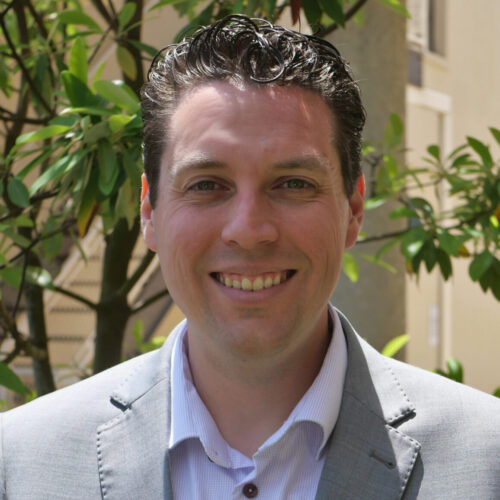
Greetings,
If you are visiting this page, please know that you are welcome here. Taking the step to reach out, or even simply reading these words, requires immense courage.
As the Victim Assistance Coordinator, my primary responsibility is to ensure that you have safe, confidential, and supportive space to be heard. The path forward looks different for everyone, and there is no single or correct way to navigate it. Please know that you do not have to carry this weight alone. Whether you are seeking resources, looking to share your story, or just trying to understand what steps are available to you, I am here to walk alongside you at whatever pace you choose.
I am committed to listen with humility, to respect your privacy, and to offer steady, practical support as you seek peace, justice, and healing. Your voice matters, your experience matters, you are not forgotten, and you are not alone.
Whenever you are ready, I am here to listen.
Sincerely,
Dominic Colucy
Victim Assistance Coordinator
How can I make a report of abuse?
If you know or suspect that you or someone you know has been abused at any time by a priest, deacon, religious, seminarian, person in formation, employee or volunteer of the Diocese of Youngstown, or if you believe that abuse has occurred or is currently occurring, contact civil authorities and also Mr. Dominic Colucy, Victim Assistance Coordinator.
By email: dcolucy@youngstowndiocese.org
By phone (confidential response line): 330.718.1388
By mail:
CONFIDENTIAL*
Diocese of Youngstown
Attn: Dominic Colucy
144 West Wood Street Youngstown, OH 44503
*Please mark mailed reports of abuse or policy violations as “confidential.”
What should I know before I make a report of abuse to the Victim Assistance Coordinator?
A) The diocese encourages you to contact Children Services and/or law enforcement first.
B) The diocese is obliged to report your allegation to civil authorities, which includes Children Services and/or law enforcement.
C) You have the right to pursue your complaint through civil and/or criminal authorities or through the procedures established in the diocesan Safe Environment Policy, which is available on this website.
D) You have the right to seek independent legal advice before choosing any of the options available, or at any time in the process.
E) If you elect to be represented by legal counsel, the diocesan attorney will be present at any meetings with the Victim Assistance Coordinator or other diocesan representatives.
F) You have the right to decline to answer any questions that are asked when making a report.
G) The accused has the right to know the name of their accuser, and the accused person holds the presumption of innocence.
What happens after a report of abuse is made?
The following is a general summary of how the diocese responds to an allegation against a person that is currently living. A similar process is followed when the accused person is deceased, but with notable differences.
1) The allegation is reported to civil authorities, which includes Children Services and/or law enforcement.
2) The Diocesan Task Force meets to review the allegation and to determine the initial and immediate response of the diocese. This may include the accused person being asked to take a leave of absence pending the results of any investigation.
3) The Safe Environment Coordinator will notify the Review Board of the allegation.
4) The bishop will appoint a person to conduct a preliminary investigation. The reporter will be asked to meet with the investigator.
5) If criminal/civil authorities decide to investigate the allegation the preliminary investigation will automatically pause and can only be resumed by the bishop.
6) Once concluded, the results of the preliminary investigation are submitted to the Review Board, which will advise the bishop in his assessment of the allegations.
7) If the accused is a priest or deacon, or when required by Canon Law, the case will then be sent to the Dicastery for the Doctrine of the Faith (DDF) in Rome for review. The DDF will provide the diocese with guidance on how to proceed in accordance with Canon Law.
Can I make a report of abuse in person?
Yes, please contact the Victim Assistance Coordinator to arrange a meeting. The meeting can take place at the diocesan offices, or at another agreed upon location. You are also welcome to bring a support person with you to the meeting. If you elect to be represented by legal counsel, the diocesan attorney will be present at any meeting with the Victim Assistance Coordinator.
Does the Diocese of Youngstown provide spiritual support for victim-survivors?
Yes, the diocese will help victim-survivors find a person who can provide spiritual support. Victim-survivors are also invited to request a meeting with the bishop or his representative. You are welcome to discuss this with the Victim Assistance Coordinator.
Does the Diocese of Youngstown provide counseling for victim-survivors?
Yes, when applicable, the diocese will make reasonable efforts to help victim-survivors receive immediate, competent, therapeutic assistance from a licensed professional. However, the diocese will only provide options for providers, not direct referrals to specific professionals. It is solely the responsibility of the victim-survivor to select their own mental health care provider. The following links could be a good place to start if you intend to begin working with a mental health care professional (psychologytoday.com or emdria.org). You are welcome to discuss this with the Victim Assistance Coordinator.
Does the Diocese of Youngstown provide in-house counseling for victim-survivors?
No, the diocese does not provide in-house counseling or professional mental health care. The Victim Assistance Coordinator is not a mental health care professional.
Does the Diocese of Youngstown provide counseling for the families of victim-survivors?
This is evaluated on a case-by-case basis. You are welcome to discuss this with the Victim Assistance Coordinator.
Does the Diocese of Youngstown provide support for the parishes and communities that are affected by abuse allegations?
Yes, the diocese will reach out and serve as a resource to the affected parish or community, and local leaders are encouraged to offer suggestions to the bishop and his staff recommending how healing can best be achieved. The local leaders, especially clergy and professional staff, occupy a critical position in the response to instances of abuse. It is they who know the victim-survivors, their families, and the local community. It is they who can offer a particularly effective ministry of healing, both short-term and long-term. It is the special responsibility of diocesan staff, along with local leaders, to listen well and to provide concrete means for healing.
Reporting Resources
Reports to Civil Authorities
Diocesan Reporting Requirements
Report Bishop Abuse
Contact the Office of Safe Environment
Contact the Office of Safe Environment (Please see the additional contact information above for the dedicated Confidential Victims Assistance phone number)