

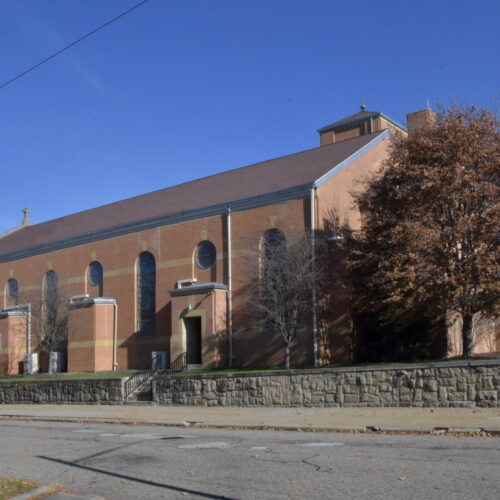
The history of Saint Joseph Parish can be traced back to Catholic settlers from Ireland, Germany and France in the early 19th century. The earliest Masses were held in local homes until the pastor of Saint John the Baptist in Canton rented Lamborn Hall for the community to hold regular Masses in 1859.
The community received their first resident pastor in 1866, and land was purchased for the construction of a cemetery and small frame church, but the closing of the Rolling Mill due to the Panic of 1873 caused delays as the town dealt with economic uncertainty.
Finally, a permanent Gothic- style church was dedicated on October 20, 1881, by Cleveland Bishop Richard Gilmour. The temporary church building was converted into the first parish school. Near the turn of the century, the parish acquired the nearby Academy of Alliance College, which became the new pastoral residence and school. The Dominican Sisters arrived to teach the students. By 1940, the congregation had grown and the original church was razed to make room for a new Romanesque church on the same site, which was completed on February 2, 1941. The parish school was merged with Regina Coeli’s School in 1973.
In the mid-1990s, the parish undertook a difficult project to stabilize the church building— the foundation under the sanctuary was beginning to sink. The parishioners themselves raised funds and volunteered labor to reduce the cost of the repairs. The parish maintains several outreach and prayer ministries, including a Knights of Columbus Council, St. Vincent De Paul Society, a Men’s Fellowship Group, and a Catholic Women’s Club (formed in partnership with Regina Coeli), among others.
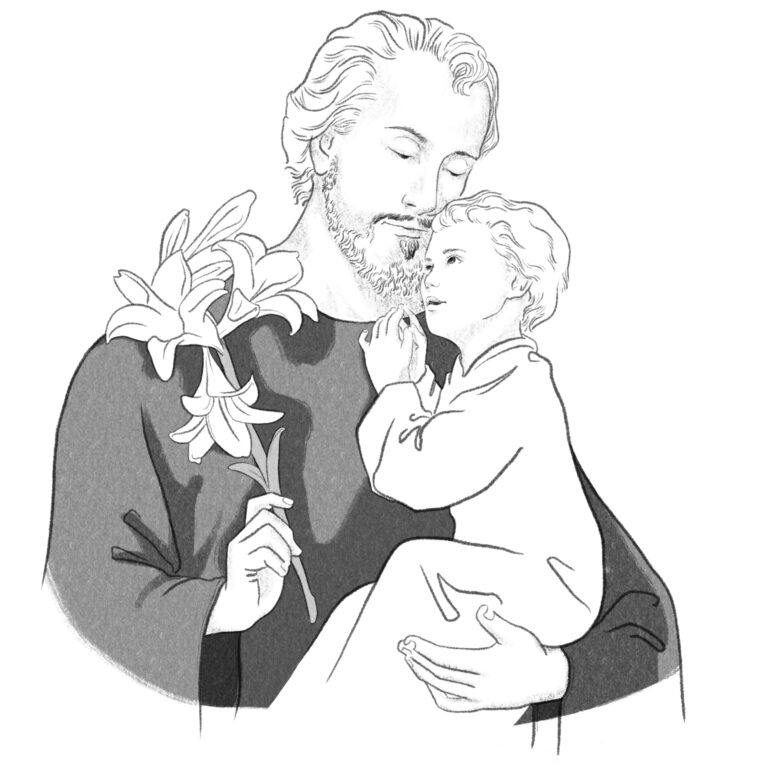
One of several parishes in the diocese dedicated to Saint Joseph—particularly in Stark County—the parish’s dedication to the patron of the Universal Church reflects their trust in his protection and intercession.
Description from The March of the Eucharist, 2nd edition (2025) published by The Catholic Echo