


The parish of St. Patrick in Hubbard first arose from a group of Irish and German immigrants living in the area. This community petitioned the pastor of St. Columba Parish in Youngstown to make Hubbard a “station”—which is the first formally recognized worship community in the Church, before a mission and finally a parish— allowing them to celebrate Mass more frequently thanks to traveling priests from multiple nearby parishes.
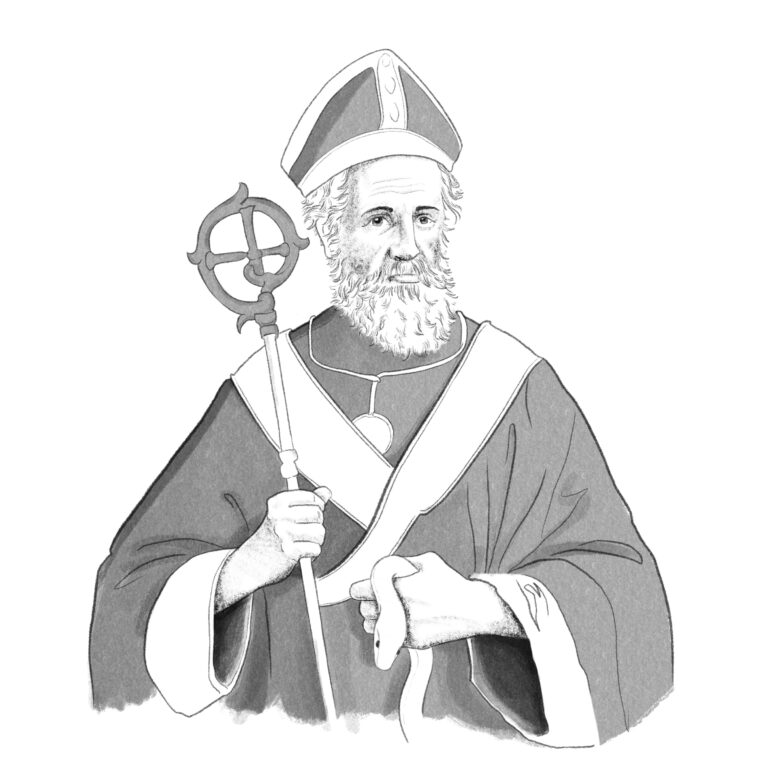
The community deeply desired a church of their own, and in January 1866 purchased a lot on which they could eventually construct a worship site. Irish parishioners chose the patron saint of Ireland, Saint Patrick, as the patron of the parish. They set to work building a church, with the first Mass celebrated in the still-unfinished structure in the fall of 1867. For an altar, the parishioners used a carpenter’s bench, with rain and snow falling on the parishioners sitting near the unfinished chimney.
By 1868, St. Patrick had become a mission of St. Mary Parish in Warren, meaning that they would regularly receive a priest to celebrate Mass. The following year, the community became a parish and in 1870 received their first resident pastor. At the same time, they also received Sisters of the Humility of Mary to staff their two-room schoolhouse.
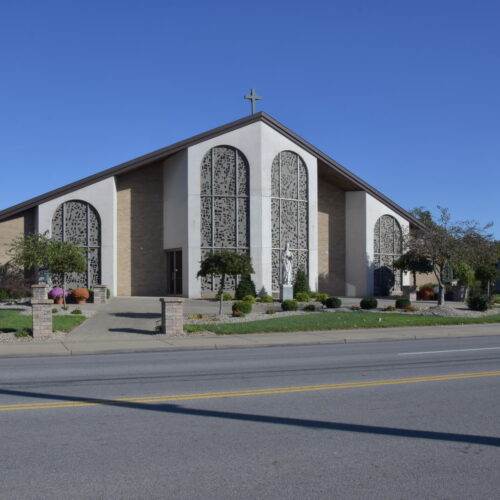
St. Patrick was rebuilt and expanded several times over the proceeding decades to accommodate the growing population, with the school also being rebuilt in 1915 and expanded in 1953. An entirely new church was finally begun on December 12, 1966, with the first Mass celebrated in the space just two months later. Extensive renovations followed nearly half a century later in the early 2000s, including renovations of the school, the installation of an elevator in the church, and the purchase of a small house on church grounds to be used as a temporary shelter for homeless families. St. Patrick School closed in 2016.
A fire caused extensive damage to the sanctuary in 2021, which initiated significant reconstruction throughout the space, completed in 2024. Over the years, the parish began emphasizing ministry programs focused on unselfish giving, such as Lenten soup suppers raising money for the local food pantry, mission trips for the youth program and a scholarship funded by parishioners.
Description from The March of the Eucharist, 2nd edition (2025) published by The Catholic Echo