St. Paul Parish can trace its history back to a group of German settlers living in what was then known as New Berlin who, on August 1, 1844, purchased land in preparation for an eventual church. By 1847, they had erected a temporary church which was used by travelling priests. In 1858, the parish began receiving monthly Masses from the pastor of Canton’s St. John Baptist. The parish was overseen as a mission for decades, even as it grew, with an expansion occurring in 1868, and only received a resident pastor in 1896. They reverted to mission status after the death of their first pastor, until receiving a new resident pastor in the early 20th century.
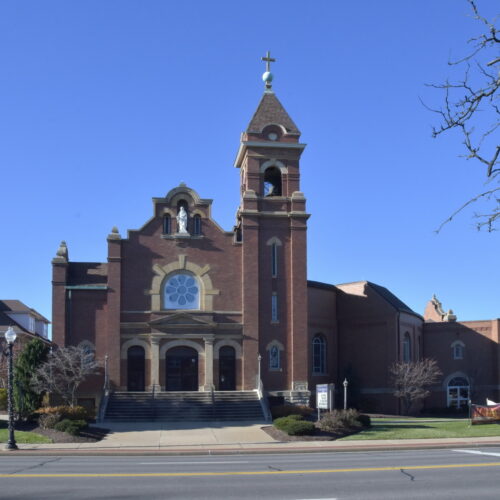
By this time, the parish had grown substantially, and the original church building could no longer accommodate the congregation. The foundation for a new church was laid in April 1910, and was dedicated just over a year later on May 7, 1911. The original church was renovated and became the home for the parish school, which opened on September 8, 1919, with approximately 100 students taught by the Sisters of the Humility of Mary. A proper school building was completed in the early 1920s, and the Sisters of the Holy Spirit from the Diocese of Pittsburgh took over teaching duties at the school from 1946 until 1975.
In the early 2000s, the parish built a “parish life center” which contained a multipurpose gym, a stage, a music room, maintenance space and two atriums for a Catechesis of the Good Shepherd program for children. The church itself was renovated and expanded to seat up to 1,000 parishioners, and was rededicated in 2006.
A preschool was opened in 2007, and the school received renovations to the library and science lab that same year.
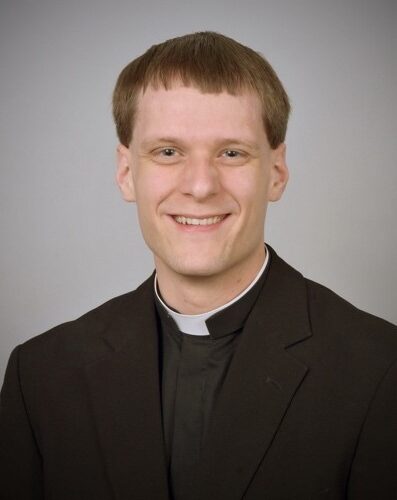
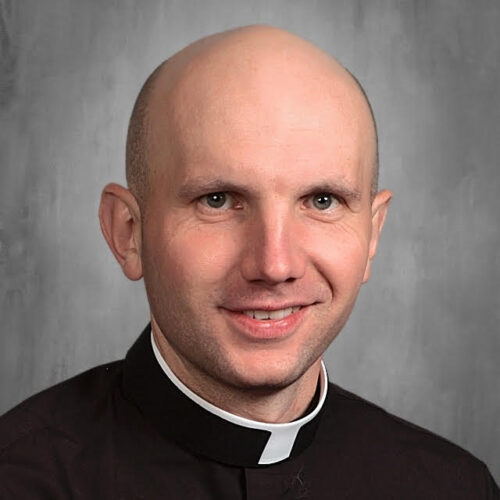
The parish maintains a robust catalogue of ministries, including a Knights of Columbus council, a Women’s Guild, a Right to Life Committee and a Men’s Club and many others. St. Paul Parish shares a pastor with Holy Spirit Parish in Uniontown. The community takes inspiration from the missionary zeal exhibited by their patron, Saint Paul, and parishioners dedicate their time not only to deepening their own faith but to spreading the Gospel to those in need with donations, volunteering and evangelization efforts.
Description from The March of the Eucharist, 2nd edition (2025) published by The Catholic Echo